Imam Nawawi Forty Hadith Charcoal
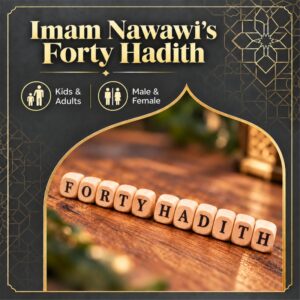
Imam Nawawi’s Forty Hadith Course
Build a deeper understanding of Islam through the teachings of Prophet Muhammad ﷺ. Our three-month Imam Nawawi’s Forty Hadith Course offers a structured journey through foundational lessons on faith, worship, sincerity, character, and responsibility.
At IQRA Academy, students study the narrations through guided reading, accessible explanations, discussion, and practical reflection. The aim is to help you understand these teachings and bring their wisdom into your worship, relationships, and everyday choices.
Why Take This Course?
You may know individual hadith without fully understanding their meanings or how they connect. This course brings essential teachings together in a clear framework, helping you build a foundation for lifelong learning.
Through this course, you can:
• Strengthen your understanding of Islam: Explore principles that connect belief, worship, and conduct.
• Make your worship more meaningful: Reflect on intention, sincerity, and following the Sunnah.
• Develop better character: Learn practical lessons about kindness, honesty, patience, and self-control.
• Improve your relationships: Understand responsible speech, concern for others, and respect for their rights.
• Build a foundation for further study: Gain familiarity with hadith terminology and guided explanation.
• Connect learning with action: Consider how each lesson can influence your daily life.
About Imam Nawawi’s Forty Hadith
Compiled by Imam Yahya ibn Sharaf an-Nawawi, Al-Arba‘in an-Nawawiyyah brings together narrations concerning foundational principles of Islam. Although commonly called “The Forty Hadith,” the standard collection contains 42 narrations.
Its concise wording makes it suitable for introductory study, while its rich meanings provide valuable material for deeper reflection.
How Hadith Is Taught
Each narration is studied through:
1. Guided Arabic reading to become familiar with its wording.
2. Vocabulary explanations to clarify important words and expressions.
3. A clear translation to support understanding.
4. Scholarly explanation to explore the meaning and relevant context.
5. Practical lessons to connect the teaching with everyday situations.
6. Questions and revision to consolidate understanding.
Students learn to distinguish the original narration from its translation, commentary, and practical application.
Three-Month Learning Plan
Month One — Building the Foundation
Meet Imam an-Nawawi and become familiar with the collection and basic hadith terminology. Begin studying the narrations, focusing on intention, faith, worship, and sincerity.
Month Two — Developing Understanding
Continue through the collection, exploring character, relationships, self-control, lawful conduct, and responsibility. Use discussion and reflection to connect the lessons with daily life.
Month Three — Completing and Consolidating
Complete the remaining narrations, revisit important themes, and strengthen understanding through revision and assessment. Eligible students complete the teacher’s requirements for the Ijazah pathway.
This is a thematic overview. Lessons follow the agreed teaching sequence, with time allocated according to the complexity of each narration and students’ needs.
Learning Activities and Progress Review
The course includes guided reading, discussion, short comprehension exercises, oral or written summaries, and regular revision.
Students are encouraged to keep notes, review assigned material, and reflect on practical applications between lessons. Supported memorization can form part of the learning pathway where agreed with the teacher.
Assessment considers understanding, participation, reading, and any additional requirements set for the chosen pathway.
Who Can Join?
The course suits beginners, teenagers, adults, parents, and students wishing to strengthen their Islamic knowledge.
Previous specialist study of hadith is not required. Arabic reading support and explanations can help students access the text, while the depth of discussion can be adapted to their existing knowledge.
Qualified Teachers with Ijazah and Connected Sanad
Our teachers hold Ijazah with connected chains of transmission, continuing the scholarly tradition of learning and teaching hadith.
They provide careful guidance, clear explanations, and opportunities for students to ask questions and develop their understanding.
Student Ijazah
At the end of the course, students who fulfil the authorized teacher’s study and assessment requirements receive an Ijazah for the material studied.
The teacher specifies the scope and nature of the authorization and any requirements for reading, attendance, or memorization. Enrolment alone does not grant an Ijazah.
What You Can Achieve
By completing the course and its learning activities, you will work towards:
• Understanding the central messages of the collection.
• Recognizing important Arabic vocabulary and basic hadith terminology.
• Explaining key teachings on faith, worship, and character.
• Connecting related lessons across the narrations.
• Applying these teachings thoughtfully in daily life.
• Preparing for further guided study of hadith.
Ash-Shama’il al-Muhammadiyah Course
Develop a deeper appreciation of Prophet Muhammad ﷺ through a guided study of Ash-Shama’il al-Muhammadiyah, compiled by Imam Abu ‘Isa at-Tirmidhi. This collection brings together narrations describing the Prophet’s ﷺ appearance, personal habits, worship, manners, and interactions with others.
At IQRA Academy, our three-month course combines guided reading, clear explanations, and practical reflection. Students explore the narrations with care, understand their lessons, and consider how the Prophetic example can inspire their own character and daily life.
Why Take This Course?
Knowing the Prophet ﷺ involves learning about his conduct, compassion, worship, and treatment of people. This course helps students move from general familiarity towards a more thoughtful understanding of his example.
Through this course, you can:
• Deepen your love for the Prophet ﷺ through knowledge of his qualities and character.
• Understand his daily life through narrations about his habits and personal conduct.
• Improve your manners by reflecting on his kindness, humility, generosity, and patience.
• Make your learning practical by connecting lessons with family life and everyday interactions.
• Develop your hadith study skills through reading, vocabulary, explanation, and discussion.
• Distinguish description from obligation by learning that not every reported personal habit carries the same religious ruling.
About the Book
Ash-Shama’il al-Muhammadiyah is a collection devoted to the qualities and characteristics of Prophet Muhammad ﷺ. Its chapters provide glimpses into his personal life alongside descriptions of his noble character.
The book contains narrations of differing grades. Lessons therefore include attention to the reliability of reports, relevant scholarly explanations, and the distinction between established teachings and narrations requiring qualification.
What You Will Study ?
Discover the noble character and daily life of Prophet Muhammad ﷺ through a meaningful study of Imam at-Tirmidhi’s collection. Begin by exploring the author, the purpose of his work, and essential hadith terminology before studying narrations describing the Prophet’s ﷺ appearance, clothing, and personal belongings. Learn about his manners in walking, sitting, resting, eating, and drinking, drawing lessons in dignity, simplicity, gratitude, and care for others. Reflect on the warmth of his speech, his smiling and gentle humour, and his devotion through prayer, fasting, and Quran recitation. Explore his humility, generosity, patience, and compassion in his relationships with family, companions, and the wider community, while understanding the distinction between personal habits and religious guidance. Finally, reflect on his passing and enduring legacy, deepening your appreciation of his example and discovering how its lessons can enrich your worship, strengthen your relationships, and inspire your everyday life.
How Each Lesson Is Taught
Each lesson follows a clear learning process:
1. Read the Arabic narration with guidance.
2. Explain important vocabulary and expressions.
3. Study a clear translation of the text.
4. Discuss its meaning and context using recognized commentary.
5. Address the narration’s grading where relevant.
6. Identify practical lessons without overstating what the report establishes.
7. Review and discuss questions to consolidate understanding.
Three-Month Learning Plan
Month One — Meeting the Collection
Begin with an introduction to Imam at-Tirmidhi and the science of hadith. Study chapters concerning the Prophet’s ﷺ descriptions, clothing, belongings, movement, and personal habits.
Month Two — Exploring His Daily Life
Continue with eating, drinking, speech, smiling, humour, rest, and worship. Discuss how the narrations relate to their historical setting and what students can learn from them today.
Month Three — Reflecting on His Character and Legacy
Explore humility, generosity, compassion, household conduct, and the concluding themes of the collection. Complete revision, practical reflection, and the teacher’s assessment requirements.
The teaching pace and depth are adapted to the students’ level and the edition used. The final reading schedule identifies the chapters and narrations covered.
Learning Activities
Students strengthen their understanding through:
• Guided reading and vocabulary practice.
• Teacher-led discussion and questions.
• Short oral or written summaries.
• Reflection on manners and relationships.
• Regular revision and comprehension exercises.
• Optional memorization of selected narrations.
Who Can Join?
This course is suitable for teenagers, adults, parents, and students seeking a deeper understanding of the Prophet’s ﷺ life and character.
Previous specialist study of hadith is not required for an introductory pathway. Explanations and Arabic reading support can be adapted to learners’ needs.
Qualified Teachers with Ijazah and Connected Sanad
Our teachers hold Ijazah with connected chains of transmission, continuing the scholarly tradition of studying and teaching hadith.
Their instruction combines respect for this tradition with accessible explanations, careful discussion of the reports, and attention to students’ understanding.
Assessment and Student Ijazah
Progress is reviewed through participation, reading, comprehension, revision, and a final assessment.
Students who fulfil the authorized teacher’s requirements receive an Ijazah specifying the material studied and the nature of the authorization. Any required attendance, reading, or memorization is explained by the teacher. Enrolment alone does not grant an Ijazah.
Learning Outcomes
By the end of the course, students will have worked towards the ability to:
• Explain the purpose and main themes of the collection.
• Understand important vocabulary in the narrations studied.
• Describe aspects of the Prophet’s ﷺ character and daily life.
• Recognize why narration grading and context matter.
• Distinguish personal habits from practices carrying particular religious rulings.
• Apply lessons of kindness, humility, gratitude, and responsible conduct.
• Continue further hadith study with a stronger foundation.
All Sub-Courses in Hadith Course